
Zero-UI Commerce: How Invisible Interfaces Are Becoming the Future of Online Shopping
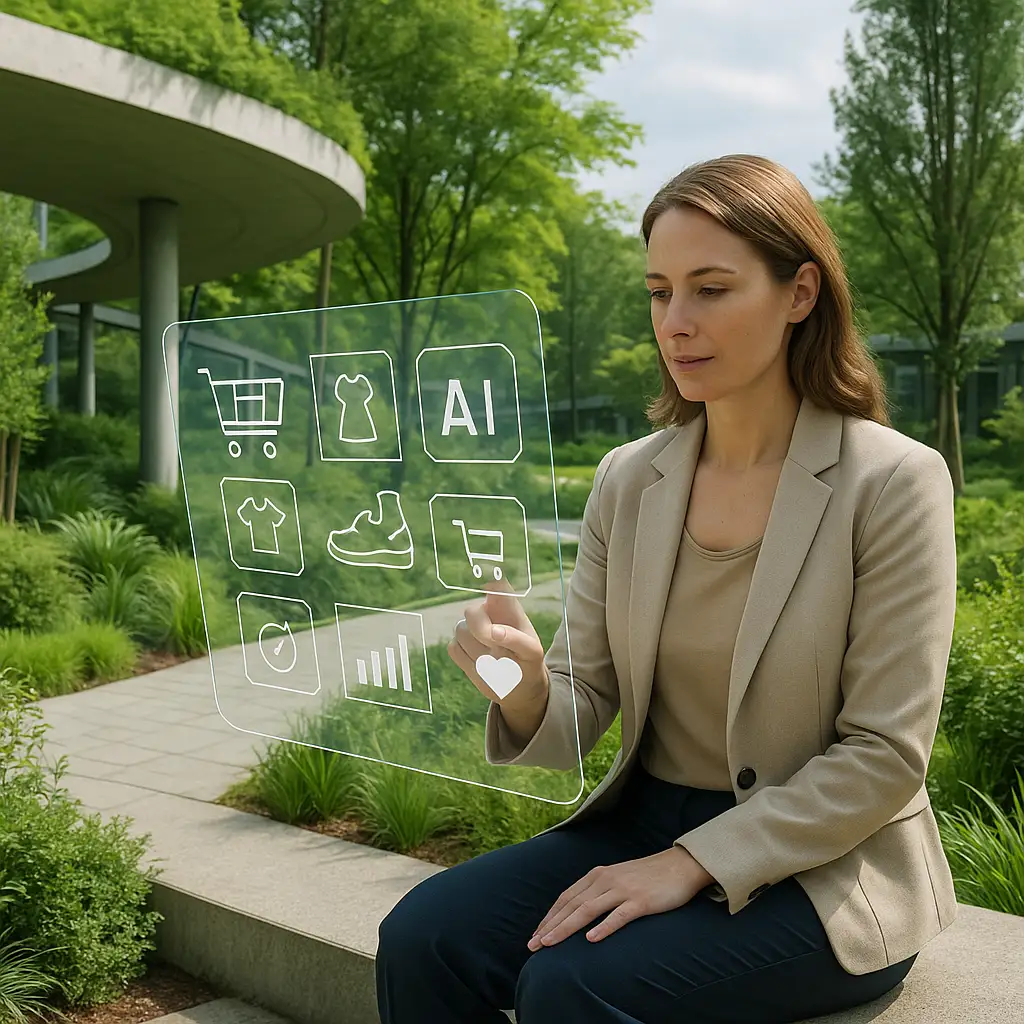
Zero-UI Commerce: How Invisible Interfaces Are Becoming the Future of Online Shopping
1. Introduction
For nearly three decades, online shopping has depended on screens: product grids, checkout buttons, filters, menus, search bars.
But a profound shift is happening.
Consumers are increasingly interacting with technology through intent, voice, automation, gesture, context, or AI agents — not through traditional interfaces.
This shift is called Zero-UI Commerce:
Shopping without the interface.
Buying without browsing.
Experiencing commerce without friction.
It’s the next evolutionary step for e-commerce and marketplaces — and it’s arriving faster than many expect.
2. What Exactly Is Zero-UI Commerce?
Zero-UI Commerce refers to buying experiences where the interface disappears, and the interaction becomes:
- voice-driven
- gesture-based
- predictive
- contextual
- automated
- conversational
- environmental (IoT & ambient computing)
- AI-assisted
Instead of navigating a store, customers express intent, and AI completes the task.
Examples include:
- Ordering via voice (“Order my usual coffee”).
- AI auto-replenishing products you’re about to run out of.
- Wearables that suggest purchases from biometric or location context.
- Smart home devices making automated micro-purchases.
- AI agents comparing products and completing checkout autonomously.
Zero-UI doesn’t remove commerce — it removes friction.
3. What’s Driving the Rise of Zero-UI Commerce?
1. AI Is Becoming Smart Enough to Understand Intent
Thanks to LLMs, semantic search, and natural language understanding, users no longer need precise commands.
2. Wearables and Ambient Devices Are Exploding
Headphones, watches, glasses, home hubs, AR devices — all capable of facilitating commerce without screens.
3. Predictive Commerce Is Maturing
Systems now anticipate needs before users articulate them.
4. Customers Want Convenience Over Everything
Speed > interface.
Results > UI complexity.
5. UX Trends Favor Minimalism
The best interface is increasingly no interface.
4. Examples of Zero-UI Commerce in Action
Voice-Driven Shopping
Alexa, Google Assistant, and Siri already process millions of purchase commands.
Auto-Replenishment Systems
Smart devices reorder supplies automatically (filters, food, hygiene items, printer ink).
Predictive Grocery Lists
Apps that know what you need before you check your pantry.
Invisible Payments
Tapless, cardless, contactless — systems that authenticate via proximity, biometrics, or movement.
AI Agents for Shopping
Users delegate tasks to autonomous agents:
“Compare the best laptop under 1200 USD and buy the one with highest battery rating.”
In-Car Commerce
Cars ordering parking, charging sessions, car washes, or coffee as you drive.
Zero-UI Commerce is already here — just unevenly distributed.
5. Why Zero-UI Commerce Is a Massive Opportunity
1. Ultra-Fast Conversions
Less friction = fewer dropoffs.
2. Personalization Becomes Embedded
The system adapts to user behavior automatically.
3. New Business Models Emerge
Micro-purchases, subscription intelligence, predictive delivery.
4. Multichannel Commerce Expands
Any device becomes a storefront.
5. Accessibility Improves
People who cannot use traditional interfaces benefit immensely.
6. Loyalty Skyrockets
When AI handles tasks, customers rarely switch to competitors.
6. The Architecture Behind Zero-UI Commerce
A modern Zero-UI commerce ecosystem relies on:
AI Core
Understanding intent, context, tone, semantics.
APIs & Composable Services
Modular checkout, pricing, product data, and inventory.
Headless Architecture
The front end becomes irrelevant — experiences run anywhere.
Edge Intelligence
Local processing for real-time responses.
IoT & Sensor Systems
Devices detect context and trigger actions.
Predictive Models
Forecast user needs and automate purchases.
Together, they create commerce that feels seamless — almost invisible.
7. Challenges and Risks
Even though the concept is powerful, Zero-UI Commerce introduces critical challenges:
1. Trust
Users must feel comfortable with AI making decisions.
2. Over-Automation
Systems must avoid making unwanted purchases.
3. Privacy
Invisible commerce must be ethically transparent.
4. Data Accuracy
Poor modeling leads to irrelevant or incorrect suggestions.
5. Regulation
Consumer protection laws may evolve significantly.
Zero-UI must be built with responsibility-first architecture.
8. The Future: Ambient, Autonomous Commerce
In the next decade, we will see:
1. Homes That Shop for You
Replenishing supplies automatically.
2. Cars as Commercial Hubs
Ordering, booking, navigating, paying — all by context.
3. Wearables Guiding Purchases
“Your running shoes are worn down — 3 best options found.”
4. AR Glasses as Micro-Commerce Interfaces
Subtle product overlays in real-world environments.
5. Autonomous Shopping Agents
Software that acts as your personal shopper 24/7.
6. Predictive Logistics
Products arriving before you even consider buying them.
Zero-UI is not about eliminating human decisions.
It’s about eliminating effort.
9. Conclusion
Zero-UI Commerce represents the next great leap in digital shopping.
As interfaces fade into the background, the experience becomes:
- intuitive,
- fast,
- personalized,
- contextual,
- and deeply integrated with everyday life.
For e-commerce brands, marketplaces, and software creators, this shift is a once-in-a-generation opportunity.
Because the future of commerce is not on screens —
it’s everywhere.
Przeglądaj inne artykuły
Why Most Marketplaces Fail: The Hidden Challenges Behind Scaling Supply and Demand
Composable Marketplaces: Building Flexible, Scalable Platforms for Modern Commerce

The New Marketplace Economy: How Platforms Are Evolving into Intelligent, Scalable Ecosystems

From Search to Intent: How AI Is Rewriting Marketplace Discovery

AI-Driven Marketplaces: Real-Time Offer Matching as a Competitive Advantage

Category Depth vs Category Breadth: The Real Economics Behind Marketplace Expansion

Liquidity Is Not Volume: The Structural Mistake That Kills Marketplaces

The Take Rate Trap: Why Raising Commissions Is the Fastest Way to Kill a Marketplace

When to Fire Sellers: Why the Best Marketplaces Grow Faster by Shrinking Supply
Marketplace Support Costs: The Hidden Margin Killer No One Models

Tiered Pricing Without Backlash: How to Monetize Sellers Without Killing Growth
Seller Segmentation: The Missing System Behind Profitable Marketplaces

Why Most Marketplaces Die at €1–3M GMV (And How to Avoid It)
Marketplace Unit Economics: When Growth Actually Becomes Profitable
How High-Margin Marketplaces Actually Make Money (Beyond Commissions)

Algorithmic Middle Management: How Software Replaces Control Layers

The Rise of Internal Software: Why the Most Profitable Digital Products Are Built for Companies, Not
Decision-Centric Software: Why the Real Value of Digital Products Is Shifting from Features to Decis
Software That Never Launches: Why Continuous Evolution Is Replacing Releases and Roadmaps
Digital Products Without Users: When Software Works Entirely Machine-to-Machine
Unbundled Platforms: Why the Future of Digital Products Belongs to Ecosystems, Not Single Applicatio

Silent Software: Why the Most Valuable Digital Products of the Future Will Be the Ones Users Barely
Cognitive Commerce: How AI Learns to Think Like Your Customers and Redefines Digital Shopping

Predictive UX: How AI Anticipates User Behavior Before It Happens

AI-Driven Product Innovation: How Intelligent Systems Are Transforming the Way Digital Products Are
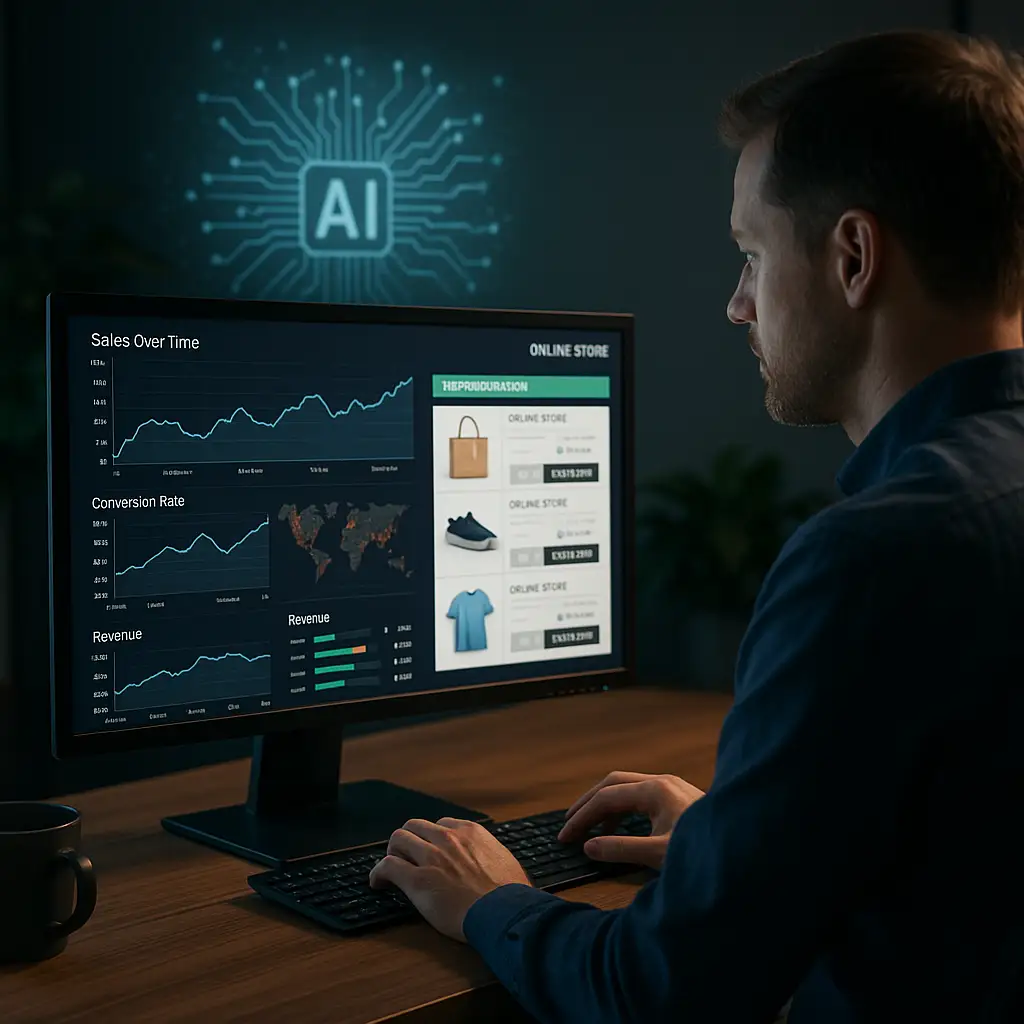
Adaptive Commerce: How AI-Driven Systems Automatically Optimize Online Stores in Real Time
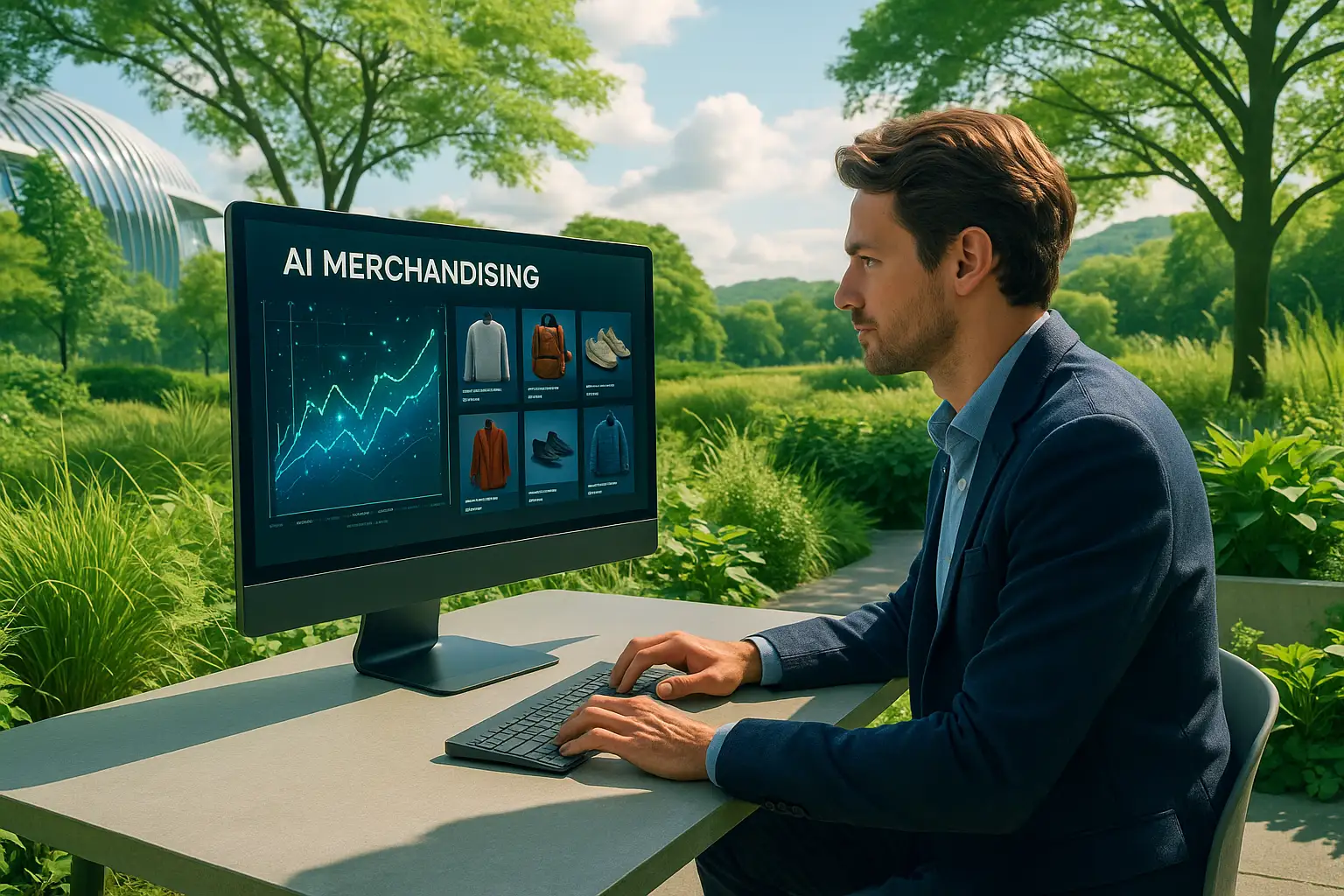
AI Merchandising: How Intelligent Algorithms Are Transforming Product Discovery in Modern E-Commerce
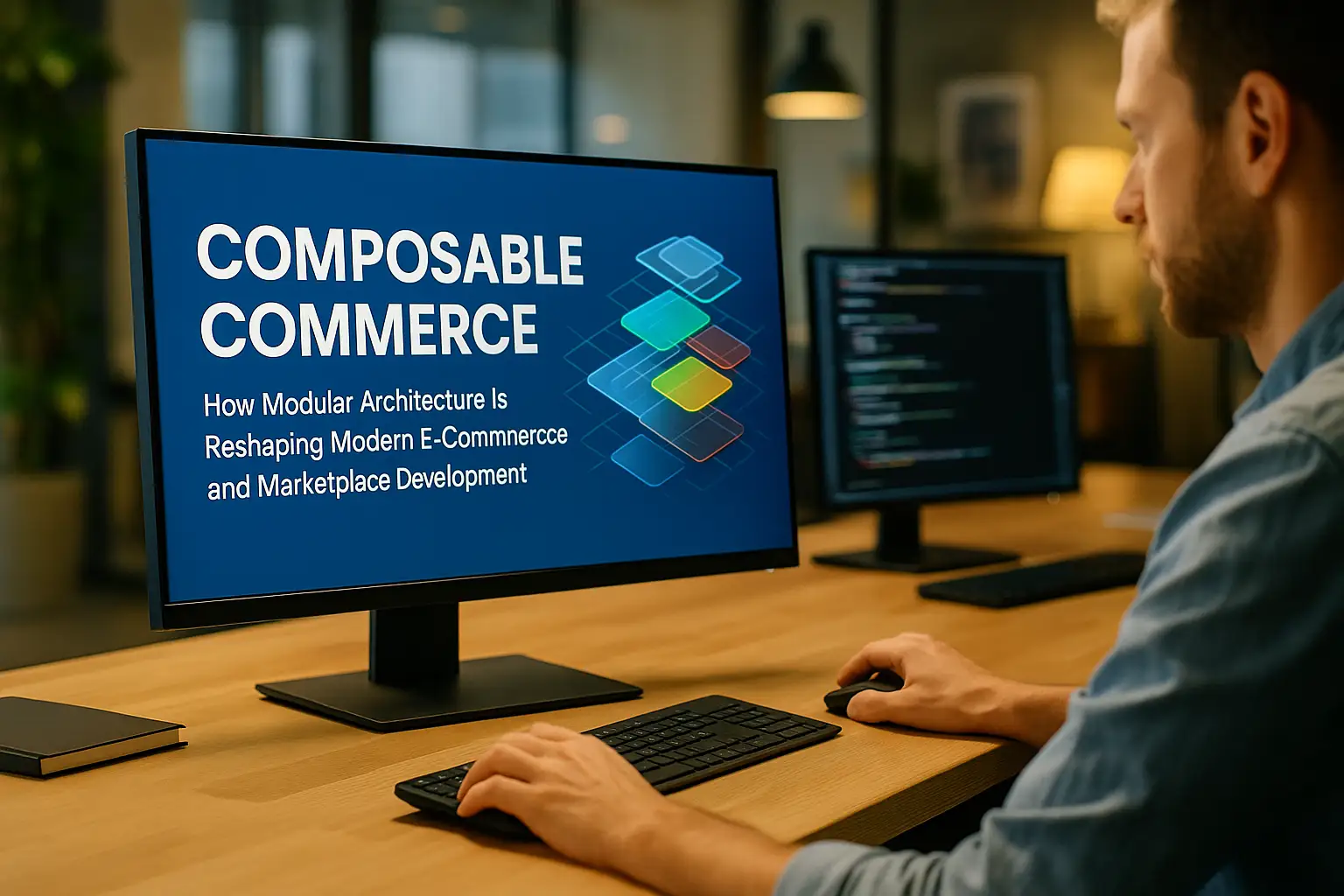
Composable Commerce: How Modular Architecture Is Reshaping Modern E-Commerce and Marketplace Develop

Context-Aware Software: How Apps Are Becoming Smarter, Adaptive, and Environment-Responsive
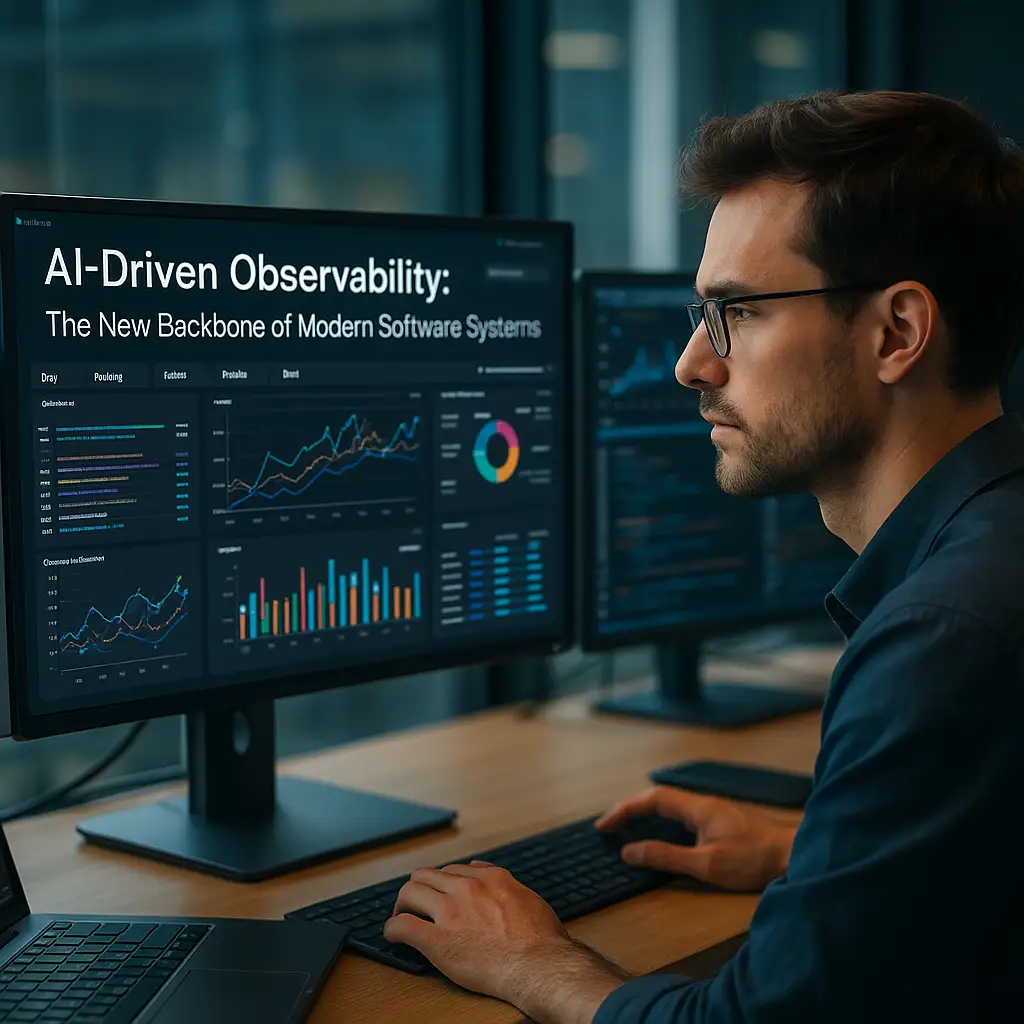
AI-Driven Observability: The New Backbone of Modern Software Systems

Hyper-Personalized Software: How AI Is Creating Products That Adapt Themselves to Every User
Edge Intelligence: The Future of Smart, Decentralized Computing

AI-Powered Cybersecurity: How Intelligent Systems Are Redefining Digital Defense

Modern Software: How Our Company Is Reshaping the Technology Landscape

From Digital Transformation to Digital Maturity: Building the Next Generation of Tech-Driven Busines

AI Agents: The Rise of Autonomous Digital Workers in Business and Software Engineering

Synthetic Data: The Next Frontier of AI and Business Intelligence

Quantum AI: How Quantum Computing Will Redefine Artificial Intelligence and Software Engineering

Design Intelligence: How AI Is Redefining UX/UI and Digital Product Creativity

How Artificial Intelligence Is Transforming DevOps and IT Infrastructure

AI Observability in Production: Monitoring, Anomaly Detection, and Feedback Loops for Smart Applicat

Low-Code Revolution: How Visual Development Is Transforming Software and Marketplace Creation

Composable Marketplaces: How Modular Architecture Is the Future of Platform Engineering
AI-Powered Storyselling: How Artificial Intelligence Is Reinventing Brand Narratives
The Era of Invisible Commerce: How AI Will Make Shopping Disappear by 2030
From Attention to Intention: The New Era of E-Commerce Engagement
Predictive Commerce: How AI Can Anticipate What Your Customers Will Buy Next

Digital Trust 2030: How AI and Cybersecurity Will Redefine Safety in the Digital Age

Cybersecurity in the Age of AI: Protecting Digital Trust in 2025–2030
The Future of Work: Humans and AI as Teammates
Green IT: How the Tech Industry Must Adapt for a Sustainable Future

Emerging Technologies in IT: What Will Shape 2025–2030

Growth Marketing – A Fast-Track Strategy for Modern Businesses
AI SEO Tools – 5 Technologies Revolutionizing Online Stores
AI SEO – How Artificial Intelligence Is Transforming Online Store Optimization

Product-Led Growth – When the Product Sells Itself

Technology in IT – Trends Shaping the Future of Business and Everyday Life
Marketplace Growth – How Exchange Platforms and E-commerce Build the Network Effect
Edge Computing – Bringing Processing Power Closer to the User

Agentic AI in Applications – When Software Starts Acting on Its Own

Neuromorphic Computers and 6G Networks – The Future of IT That Will Change the Game

Meta Llama 3.2 – The Open AI That Could Transform E-Commerce and SEO
AI Chatbot for Online Stores and Apps – More Sales, Better SEO, and Happier Customers

5 steps to a successful software implementation in your company

Innovative IT solutions — why invest now?

Innovative software development methods for your business

5 steps to successfully implement technological innovation in your company