
AI-Powered Cybersecurity: How Intelligent Systems Are Redefining Digital Defense

AI-Powered Cybersecurity: How Intelligent Systems Are Redefining Digital Defense
1. Introduction
In the digital era, every organization is a potential target.
From ransomware to data breaches and supply chain attacks, cyber threats have become faster, more sophisticated, and more unpredictable.
Human-driven security operations are no longer enough.
Enter AI-powered cybersecurity — intelligent defense systems capable of detecting anomalies, predicting attacks, and responding autonomously in milliseconds.
As artificial intelligence becomes the backbone of modern defense, it’s not just changing how we protect data — it’s redefining the entire security paradigm.
2. The Shift from Reactive to Predictive Security
Traditional cybersecurity has always been reactive — responding after an incident occurs.
But in a world of zero-day exploits and AI-generated attacks, prevention must happen before detection.
AI enables predictive protection:
- It learns normal network behavior to spot deviations instantly.
- It correlates data across millions of endpoints to anticipate new threat patterns.
- And it automates responses faster than any human analyst could act.
In short, AI transforms defense from reactive to proactive — replacing reaction with prediction.
3. How AI Is Transforming Cyber Defense
A. Real-Time Threat Detection
AI systems monitor massive data streams — from log files to cloud traffic — and identify anomalies that signal potential intrusions.
Unlike rule-based systems, machine learning models continuously adapt as threats evolve.
B. Behavioral Analytics
Instead of relying solely on known attack signatures, AI builds behavioral profiles of users, systems, and devices.
If a user suddenly accesses restricted files or transfers large amounts of data at midnight, AI triggers instant alerts.
C. Autonomous Response
AI-driven platforms like Darktrace, CrowdStrike Falcon, and Microsoft Sentinel can isolate infected devices or block malicious processes automatically — without waiting for human approval.
D. Threat Intelligence Correlation
AI consolidates information from global threat databases, dark web monitoring, and internal logs to detect emerging attacks early.
This integration turns cybersecurity into an adaptive ecosystem — one that learns and evolves in real time.
4. Machine Learning: The Engine of Smart Security
At the heart of AI cybersecurity is machine learning (ML) — algorithms that train themselves on enormous volumes of threat data.
There are three key types of ML applications in cybersecurity:
- Supervised learning: Classifying threats based on historical examples.
- Unsupervised learning: Detecting anomalies and zero-day attacks without prior examples.
- Reinforcement learning: Continuously improving detection accuracy through trial and feedback.
This constant feedback loop enables self-healing systems that get smarter after every attack.
5. AI vs. AI: The New Battlefield
Ironically, the same technology defending networks is also powering cybercrime.
Hackers are using AI to create phishing campaigns, generate deepfakes, and automate intrusion attempts.
This has led to a new era of AI vs. AI — intelligent systems battling for control in cyberspace.
The winners will be those who can train faster, learn deeper, and adapt smarter.
It’s an arms race where data is ammunition, and algorithms are soldiers.
6. Building Autonomous Security Architectures
To harness AI’s full potential, cybersecurity architecture must evolve.
Modern security frameworks combine:
- Zero Trust models — never assume trust, always verify.
- AI-driven SOCs (Security Operations Centers) — continuous monitoring and decision automation.
- Cloud-native threat intelligence — scalable, global, and integrated.
- Data fusion layers — combining IT, IoT, and OT telemetry for unified visibility.
This approach creates digital immune systems — architectures that detect, diagnose, and defend without human intervention.
7. Business Impact: Why AI Security Is a Strategic Advantage
Cybersecurity is no longer an IT function — it’s a business enabler.
Reduced Downtime
AI shortens the time from breach to containment, minimizing operational disruption.
Lower Costs
Automated detection reduces the need for large manual security teams.
Faster Compliance
AI systems automatically track and report compliance with frameworks like GDPR, ISO 27001, and NIST.
Trust and Reputation
Businesses that implement intelligent security gain customer confidence — a priceless asset in the era of data transparency.
8. Ethical and Governance Challenges
While AI enhances security, it also raises important questions:
- Bias in data: Poor training data can create false positives or miss sophisticated threats.
- Privacy concerns: Overly aggressive monitoring can invade personal or customer data.
- Accountability: When AI acts autonomously, who is responsible for its decisions?
Responsible AI cybersecurity requires governance frameworks that balance automation with accountability.
9. The Human-AI Partnership
Contrary to fear, AI isn’t replacing human experts — it’s amplifying them.
Security analysts still play a vital role:
- Defining ethical parameters,
- Interpreting complex alerts,
- And refining models for accuracy.
In a human-AI alliance, machines handle the speed; humans handle the strategy.
Together, they form a symbiotic defense system — faster, smarter, and more resilient than either alone.
10. The Future of AI Cybersecurity
The next generation of cybersecurity will be fully autonomous and predictive.
AI will not only detect and stop attacks but also anticipate intent — understanding an attacker’s goals before action occurs.
Future trends include:
- Quantum-resilient encryption
- Neural network–based authentication
- Self-repairing systems that restore code integrity automatically
As AI models become more transparent and explainable, trust in machine-led defense will grow — making intelligent security the new global standard.
Conclusion
The future of cybersecurity isn’t about more firewalls or faster patches — it’s about smarter defense.
AI-powered systems bring adaptability, speed, and foresight into a domain that has long been reactive.
They learn, evolve, and defend in ways humans never could — creating a digital ecosystem where protection becomes predictive.
For businesses, embracing AI-driven cybersecurity is not just a necessity — it’s a competitive strategy.
Because in a world where threats never sleep, your defense can’t either.
Przeglądaj inne artykuły
Why Most Marketplaces Fail: The Hidden Challenges Behind Scaling Supply and Demand
Composable Marketplaces: Building Flexible, Scalable Platforms for Modern Commerce

The New Marketplace Economy: How Platforms Are Evolving into Intelligent, Scalable Ecosystems
From Search to Intent: How AI Is Rewriting Marketplace Discovery
AI-Driven Marketplaces: Real-Time Offer Matching as a Competitive Advantage

Category Depth vs Category Breadth: The Real Economics Behind Marketplace Expansion

Liquidity Is Not Volume: The Structural Mistake That Kills Marketplaces

The Take Rate Trap: Why Raising Commissions Is the Fastest Way to Kill a Marketplace

When to Fire Sellers: Why the Best Marketplaces Grow Faster by Shrinking Supply

Marketplace Support Costs: The Hidden Margin Killer No One Models

Tiered Pricing Without Backlash: How to Monetize Sellers Without Killing Growth

Seller Segmentation: The Missing System Behind Profitable Marketplaces

Why Most Marketplaces Die at €1–3M GMV (And How to Avoid It)
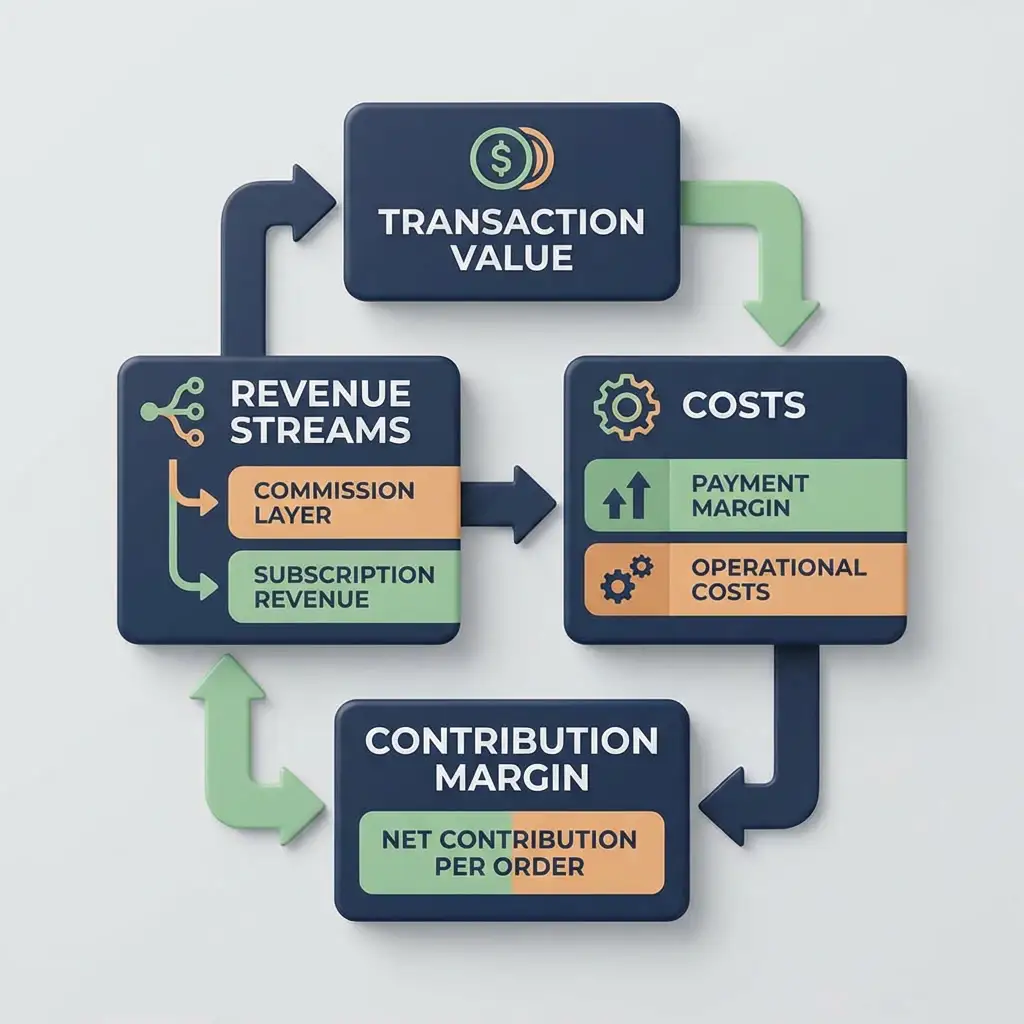
Marketplace Unit Economics: When Growth Actually Becomes Profitable
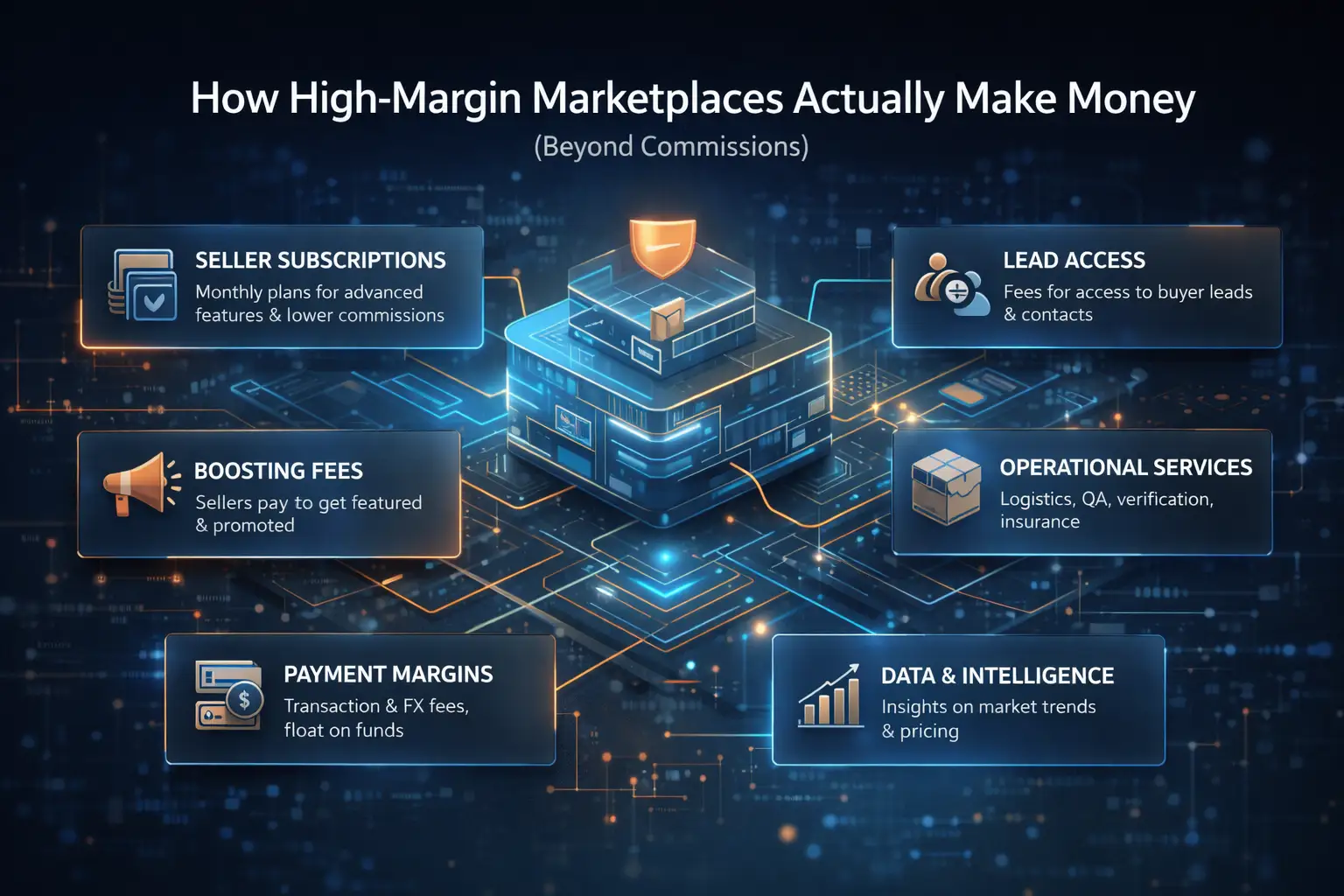
How High-Margin Marketplaces Actually Make Money (Beyond Commissions)
Algorithmic Middle Management: How Software Replaces Control Layers

The Rise of Internal Software: Why the Most Profitable Digital Products Are Built for Companies, Not
Decision-Centric Software: Why the Real Value of Digital Products Is Shifting from Features to Decis
Software That Never Launches: Why Continuous Evolution Is Replacing Releases and Roadmaps
Digital Products Without Users: When Software Works Entirely Machine-to-Machine
Unbundled Platforms: Why the Future of Digital Products Belongs to Ecosystems, Not Single Applicatio

Silent Software: Why the Most Valuable Digital Products of the Future Will Be the Ones Users Barely
Cognitive Commerce: How AI Learns to Think Like Your Customers and Redefines Digital Shopping

Predictive UX: How AI Anticipates User Behavior Before It Happens

AI-Driven Product Innovation: How Intelligent Systems Are Transforming the Way Digital Products Are
Adaptive Commerce: How AI-Driven Systems Automatically Optimize Online Stores in Real Time
Zero-UI Commerce: How Invisible Interfaces Are Becoming the Future of Online Shopping
AI Merchandising: How Intelligent Algorithms Are Transforming Product Discovery in Modern E-Commerce

Composable Commerce: How Modular Architecture Is Reshaping Modern E-Commerce and Marketplace Develop

Context-Aware Software: How Apps Are Becoming Smarter, Adaptive, and Environment-Responsive
AI-Driven Observability: The New Backbone of Modern Software Systems

Hyper-Personalized Software: How AI Is Creating Products That Adapt Themselves to Every User
Edge Intelligence: The Future of Smart, Decentralized Computing

Modern Software: How Our Company Is Reshaping the Technology Landscape

From Digital Transformation to Digital Maturity: Building the Next Generation of Tech-Driven Busines

AI Agents: The Rise of Autonomous Digital Workers in Business and Software Engineering
Synthetic Data: The Next Frontier of AI and Business Intelligence

Quantum AI: How Quantum Computing Will Redefine Artificial Intelligence and Software Engineering

Design Intelligence: How AI Is Redefining UX/UI and Digital Product Creativity
How Artificial Intelligence Is Transforming DevOps and IT Infrastructure
AI Observability in Production: Monitoring, Anomaly Detection, and Feedback Loops for Smart Applicat

Low-Code Revolution: How Visual Development Is Transforming Software and Marketplace Creation

Composable Marketplaces: How Modular Architecture Is the Future of Platform Engineering
AI-Powered Storyselling: How Artificial Intelligence Is Reinventing Brand Narratives
The Era of Invisible Commerce: How AI Will Make Shopping Disappear by 2030
From Attention to Intention: The New Era of E-Commerce Engagement
Predictive Commerce: How AI Can Anticipate What Your Customers Will Buy Next

Digital Trust 2030: How AI and Cybersecurity Will Redefine Safety in the Digital Age

Cybersecurity in the Age of AI: Protecting Digital Trust in 2025–2030
The Future of Work: Humans and AI as Teammates

Green IT: How the Tech Industry Must Adapt for a Sustainable Future

Emerging Technologies in IT: What Will Shape 2025–2030

Growth Marketing – A Fast-Track Strategy for Modern Businesses
AI SEO Tools – 5 Technologies Revolutionizing Online Stores
AI SEO – How Artificial Intelligence Is Transforming Online Store Optimization

Product-Led Growth – When the Product Sells Itself
Technology in IT – Trends Shaping the Future of Business and Everyday Life

Marketplace Growth – How Exchange Platforms and E-commerce Build the Network Effect
Edge Computing – Bringing Processing Power Closer to the User

Agentic AI in Applications – When Software Starts Acting on Its Own
Neuromorphic Computers and 6G Networks – The Future of IT That Will Change the Game

Meta Llama 3.2 – The Open AI That Could Transform E-Commerce and SEO
AI Chatbot for Online Stores and Apps – More Sales, Better SEO, and Happier Customers

5 steps to a successful software implementation in your company

Innovative IT solutions — why invest now?

Innovative software development methods for your business

5 steps to successfully implement technological innovation in your company