
Composable Commerce: How Modular Architecture Is Reshaping Modern E-Commerce and Marketplace Develop
Composable Commerce: How Modular Architecture Is Reshaping Modern E-Commerce and Marketplace Development
1. Introduction
The e-commerce world is accelerating.
New customer expectations, new sales channels, new devices, and rapidly changing business models are forcing companies to rethink how online stores are built.
The problem?
Most legacy e-commerce platforms were designed for a world that no longer exists — slow-moving, single-channel, predictable.
Today, businesses need agility, personalization, and global scalability.
Enter Composable Commerce: a modern, modular architecture that replaces the old “all-in-one shop system” with a flexible ecosystem of independent components.
It’s not just a trend — it’s becoming the new standard for future-proof digital commerce.
2. What Is Composable Commerce?
Composable commerce means building your shop or marketplace from modular, interchangeable services, instead of relying on a single monolithic platform.
Each part of the commerce system is an independent component — a “building block” — such as:
- Product catalog
- Cart
- Checkout
- Search
- Payment processing
- Stock management
- Reviews
- Loyalty engine
- Personalization AI
- Marketing automation
- CMS content
You choose best-in-class vendors (or build your own modules) and combine them into a unified system.
Think LEGO, not a fixed sculpture.
If you want to change a component — you swap it.
If you want to scale one feature — you scale only that piece.
If you want to test a new service — plug it in.
This flexibility gives e-commerce brands full control over their digital experience.
3. Why Composable Commerce Is Surging Now
1. Customer expectations are skyrocketing
Shoppers want:
- instant performance,
- ultra-personalized experiences,
- multiple payment options,
- real-time stock,
- lightning-fast checkout,
- omnichannel consistency.
Monolithic systems struggle under this complexity.
2. Businesses need faster innovation
Launching a new feature in a traditional shop can take months.
With composable architecture — days or even hours.
3. Multi-channel commerce is the new norm
Web. Mobile. Social. Marketplaces. POS. Apps.
Composable systems can support all channels simultaneously.
4. MACH architecture is maturing
The rise of:
- Microservices
- APIs
- Cloud-native services
- Headless front ends
…creates the perfect environment for composable commerce to thrive.
4. Composable Commerce vs. Monolithic Platforms
FeatureMonolithic PlatformComposable ArchitectureFlexibilityLowExtremely highDevelopment speedSlowerFast, parallelScalabilityLimitedInfiniteCustomizationHardEasyVendor lock-inHighNonePerformanceAverageHighInnovationSlowContinuous
Traditional platforms are stable.
Composable platforms are strategic weapons for growth.
5. Key Components of a Composable E-Commerce System
A modern composable setup uses:
1. Headless Frontend
React, Vue, Next.js, or similar.
Fast, decoupled, flexible.
2. API-First Commerce Engine
Like Shopify Hydrogen, BigCommerce, CommerceTools, Medusa, WooCommerce API, or custom microservices.
3. Search & Discovery Engine
Algolia, ElasticSearch, MeiliSearch.
4. Checkout & Payments
Stripe, Adyen, PayPal, Apple Pay.
5. CMS
Sanity, Strapi, Contentful, Hygraph.
6. Personalization AI
Clerk, Nosto, Bloomreach.
7. Analytics & CDP
Segment, GA4, Matomo.
Each module can evolve at its own pace.
6. Why Composable Commerce Is Perfect for Marketplaces
Marketplaces have complex workflows:
- onboarding vendors,
- multi-cart logic,
- dynamic pricing,
- diverse payment flows,
- compliance,
- vendor analytics,
- logistics integrations.
With composable architecture:
- each vendor module is independent,
- marketplace owners can change components without downtime,
- features scale based on demand (e.g., search load, checkout traffic).
The result?
High-performance, global-ready marketplaces built for limitless growth.
7. Business Benefits
A. Unlimited scalability
Traffic spikes?
Scale only the modules that need it — search, checkout, or product feeds.
B. Faster time to market
Implement new features without breaking the whole system.
C. Lower long-term cost
Instead of one massive, expensive platform — you pay only for what you use.
D. No vendor lock-in
Everything is interchangeable.
E. Competitive edge
Brands can move faster than competitors, adapt to new channels, and test new ideas instantly.
8. Challenges to Consider
Composable isn’t plug-and-play magic.
Businesses must manage:
- more integrations,
- more vendors,
- more moving parts,
- more technical decisions.
Successful adoption requires:
- strong engineering team,
- API expertise,
- DevOps maturity,
- clear architecture planning.
But the payoff is enormous.
9. Future Trends in Composable Commerce
AI-Generated Frontends
AI tools will build dynamic storefronts customized for every visitor.
Self-Optimizing Commerce Engines
Checkout flows that adapt in real time for conversions.
Composable Subscriptions & Loyalty
Plug-and-play loyalty modules for rapid retention features.
Marketplace-as-a-Service Platforms
Ultra-customizable marketplaces built from modular blocks.
True 1-to-1 Personalization
Every customer sees a different version of your store — automatically.
Composable commerce is becoming the default blueprint for modern digital ecosystems.
10. Conclusion
Composable commerce represents a major leap forward in how online stores and marketplaces are built.
It frees businesses from outdated, rigid platforms and opens the door to:
- faster development,
- limitless scaling,
- world-class user experiences,
- real innovation.
In a world where speed and personalization define success, composable commerce is not just a trend —
it’s the new foundation of e-commerce.
Przeglądaj inne artykuły
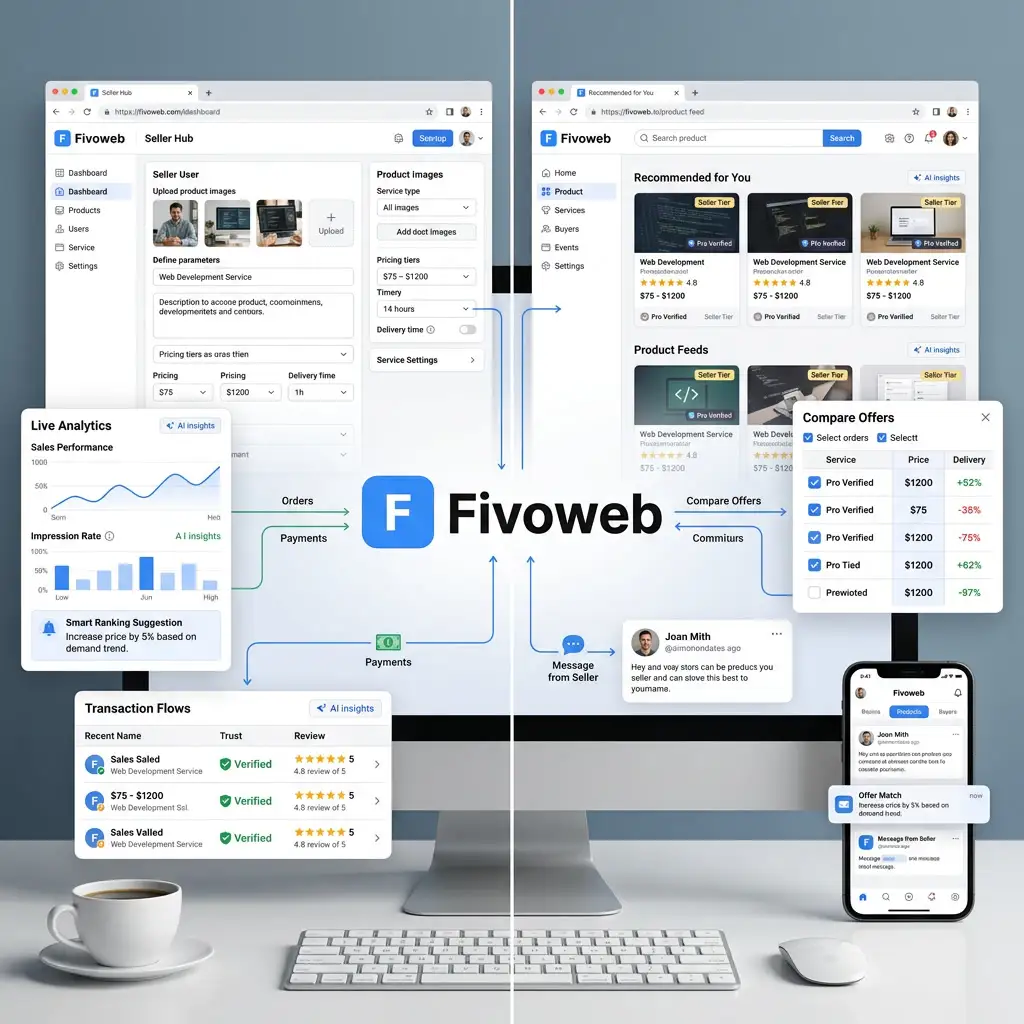
Why Most Marketplaces Fail: The Hidden Challenges Behind Scaling Supply and Demand
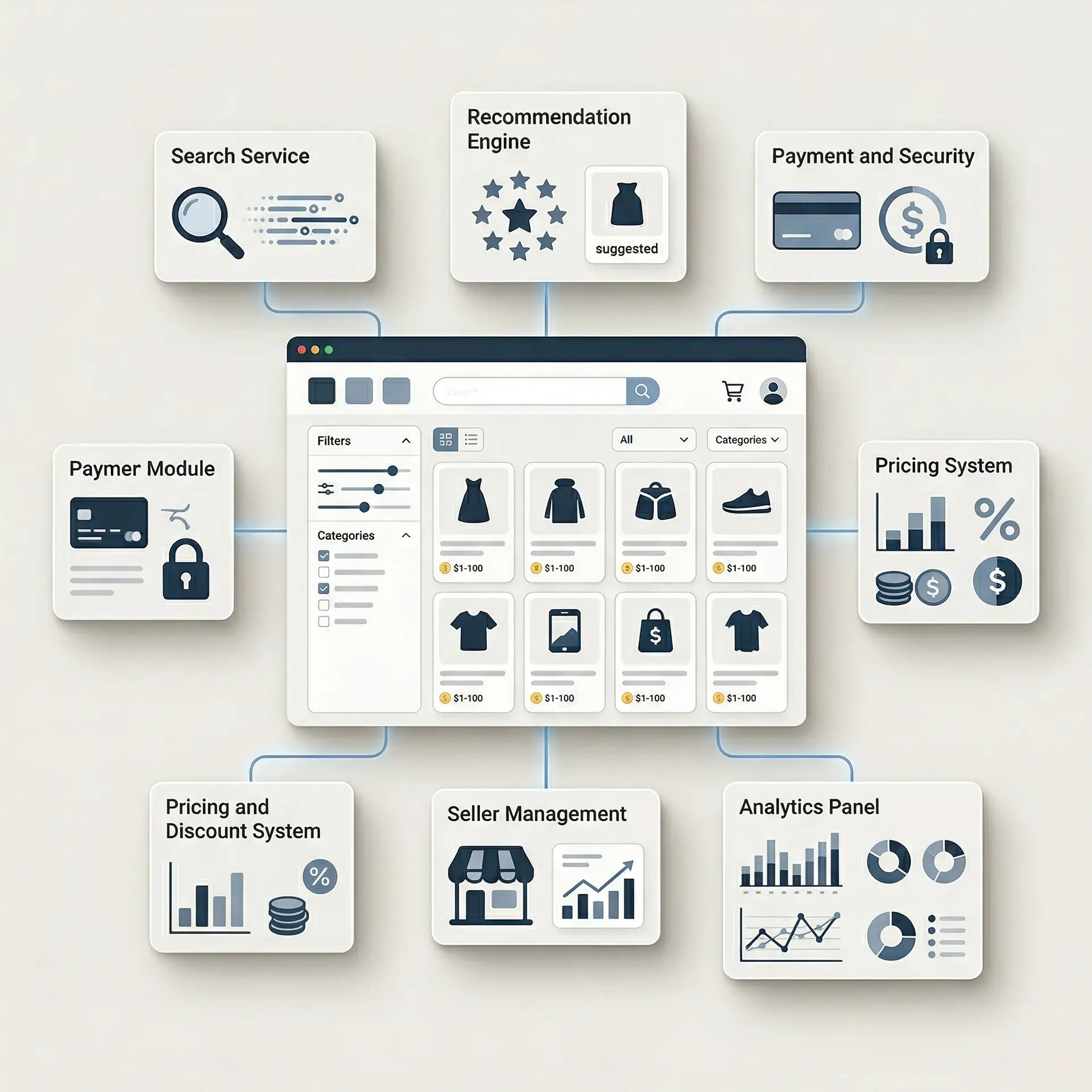
Composable Marketplaces: Building Flexible, Scalable Platforms for Modern Commerce

The New Marketplace Economy: How Platforms Are Evolving into Intelligent, Scalable Ecosystems

From Search to Intent: How AI Is Rewriting Marketplace Discovery

AI-Driven Marketplaces: Real-Time Offer Matching as a Competitive Advantage

Category Depth vs Category Breadth: The Real Economics Behind Marketplace Expansion

Liquidity Is Not Volume: The Structural Mistake That Kills Marketplaces

The Take Rate Trap: Why Raising Commissions Is the Fastest Way to Kill a Marketplace

When to Fire Sellers: Why the Best Marketplaces Grow Faster by Shrinking Supply

Marketplace Support Costs: The Hidden Margin Killer No One Models

Tiered Pricing Without Backlash: How to Monetize Sellers Without Killing Growth

Seller Segmentation: The Missing System Behind Profitable Marketplaces

Why Most Marketplaces Die at €1–3M GMV (And How to Avoid It)
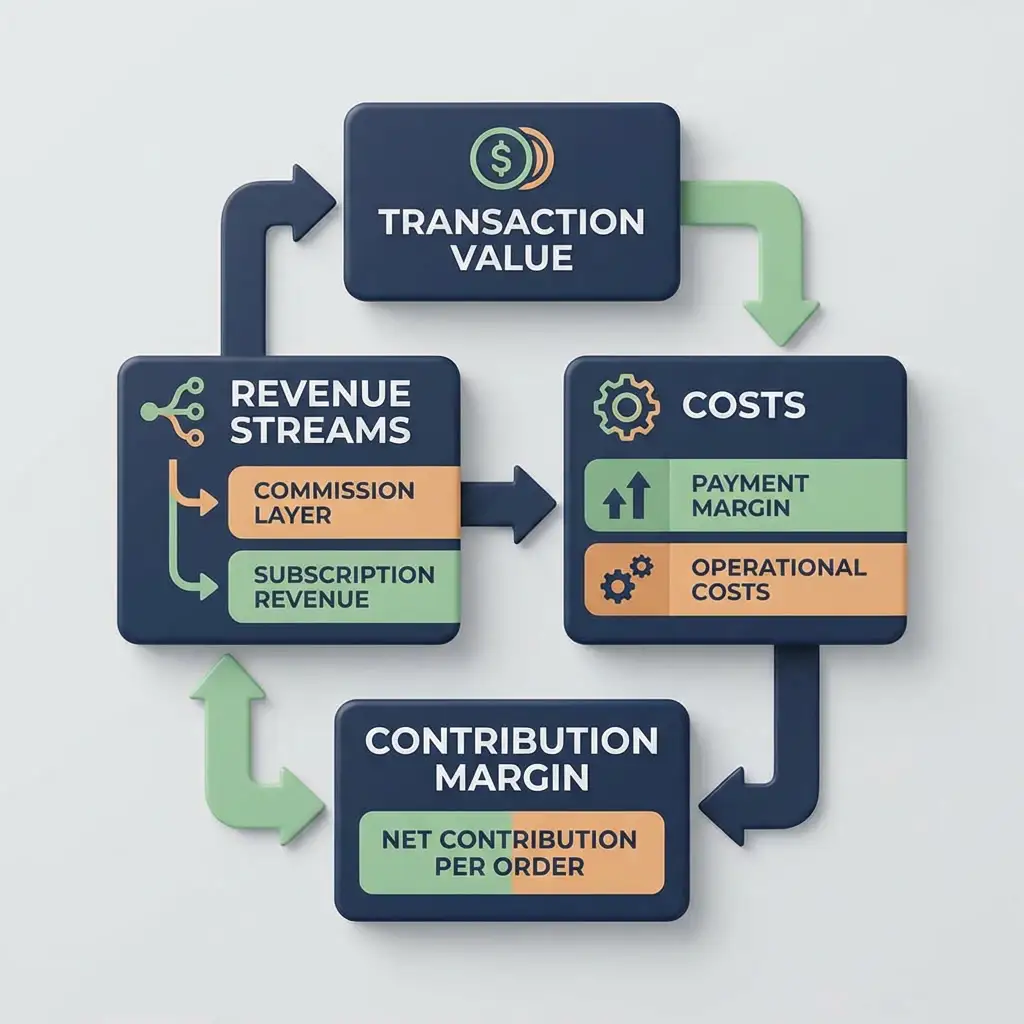
Marketplace Unit Economics: When Growth Actually Becomes Profitable

How High-Margin Marketplaces Actually Make Money (Beyond Commissions)

Algorithmic Middle Management: How Software Replaces Control Layers

The Rise of Internal Software: Why the Most Profitable Digital Products Are Built for Companies, Not
Decision-Centric Software: Why the Real Value of Digital Products Is Shifting from Features to Decis

Software That Never Launches: Why Continuous Evolution Is Replacing Releases and Roadmaps

Digital Products Without Users: When Software Works Entirely Machine-to-Machine
Unbundled Platforms: Why the Future of Digital Products Belongs to Ecosystems, Not Single Applicatio

Silent Software: Why the Most Valuable Digital Products of the Future Will Be the Ones Users Barely

Cognitive Commerce: How AI Learns to Think Like Your Customers and Redefines Digital Shopping

Predictive UX: How AI Anticipates User Behavior Before It Happens

AI-Driven Product Innovation: How Intelligent Systems Are Transforming the Way Digital Products Are

Adaptive Commerce: How AI-Driven Systems Automatically Optimize Online Stores in Real Time

Zero-UI Commerce: How Invisible Interfaces Are Becoming the Future of Online Shopping

AI Merchandising: How Intelligent Algorithms Are Transforming Product Discovery in Modern E-Commerce

Context-Aware Software: How Apps Are Becoming Smarter, Adaptive, and Environment-Responsive

AI-Driven Observability: The New Backbone of Modern Software Systems

Hyper-Personalized Software: How AI Is Creating Products That Adapt Themselves to Every User

Edge Intelligence: The Future of Smart, Decentralized Computing

AI-Powered Cybersecurity: How Intelligent Systems Are Redefining Digital Defense

Modern Software: How Our Company Is Reshaping the Technology Landscape

From Digital Transformation to Digital Maturity: Building the Next Generation of Tech-Driven Busines

AI Agents: The Rise of Autonomous Digital Workers in Business and Software Engineering

Synthetic Data: The Next Frontier of AI and Business Intelligence

Quantum AI: How Quantum Computing Will Redefine Artificial Intelligence and Software Engineering

Design Intelligence: How AI Is Redefining UX/UI and Digital Product Creativity

How Artificial Intelligence Is Transforming DevOps and IT Infrastructure

AI Observability in Production: Monitoring, Anomaly Detection, and Feedback Loops for Smart Applicat

Low-Code Revolution: How Visual Development Is Transforming Software and Marketplace Creation

Composable Marketplaces: How Modular Architecture Is the Future of Platform Engineering

AI-Powered Storyselling: How Artificial Intelligence Is Reinventing Brand Narratives

The Era of Invisible Commerce: How AI Will Make Shopping Disappear by 2030

From Attention to Intention: The New Era of E-Commerce Engagement
Predictive Commerce: How AI Can Anticipate What Your Customers Will Buy Next

Digital Trust 2030: How AI and Cybersecurity Will Redefine Safety in the Digital Age

Cybersecurity in the Age of AI: Protecting Digital Trust in 2025–2030

The Future of Work: Humans and AI as Teammates

Green IT: How the Tech Industry Must Adapt for a Sustainable Future

Emerging Technologies in IT: What Will Shape 2025–2030

Growth Marketing – A Fast-Track Strategy for Modern Businesses

AI SEO Tools – 5 Technologies Revolutionizing Online Stores
AI SEO – How Artificial Intelligence Is Transforming Online Store Optimization

Product-Led Growth – When the Product Sells Itself

Technology in IT – Trends Shaping the Future of Business and Everyday Life

Marketplace Growth – How Exchange Platforms and E-commerce Build the Network Effect

Edge Computing – Bringing Processing Power Closer to the User

Agentic AI in Applications – When Software Starts Acting on Its Own

Neuromorphic Computers and 6G Networks – The Future of IT That Will Change the Game

Meta Llama 3.2 – The Open AI That Could Transform E-Commerce and SEO

AI Chatbot for Online Stores and Apps – More Sales, Better SEO, and Happier Customers

5 steps to a successful software implementation in your company

Innovative IT solutions — why invest now?

Innovative software development methods for your business

5 steps to successfully implement technological innovation in your company